

Hong Kong is the world's third-largest financial center, with per capita GDP of approximately USD 54,023 (IMF 2025) and a digital payments ecosystem generating over USD 46 billion in e-commerce transaction volume in 2025. Digital wallets surpassed bank cards as the top online payment method for the first time in 2025, driven by a mobile-native consumer base where 91.2% of e-commerce users are aged 54 and under. The market is projected to reach 5.4 million e-commerce users by 2029 at a CAGR (Compound Annual Growth Rate) of 8.46%.
Hong Kong at a glance
Market | Hong Kong SAR |
|---|---|
Population | 7.55 million |
GDP (USD) | ~$407.9 billion |
Currency | Hong Kong Dollar (HKD) |
E-commerce users (2025) | 6.37 million |
Projected e-commerce penetration (2029) | 73.1% |
Which Payment Methods Do Hong Kong Buyers Use Most?
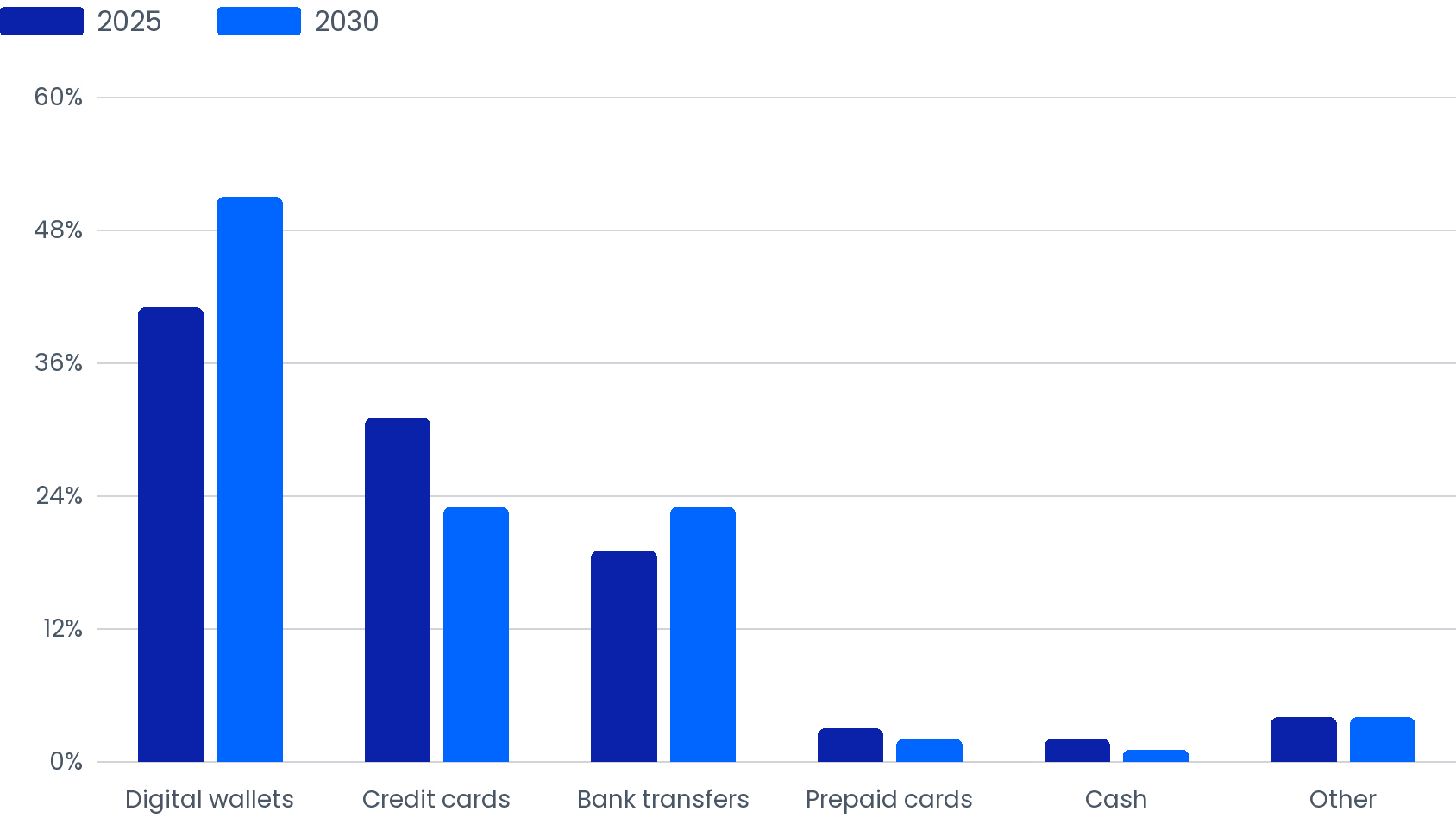
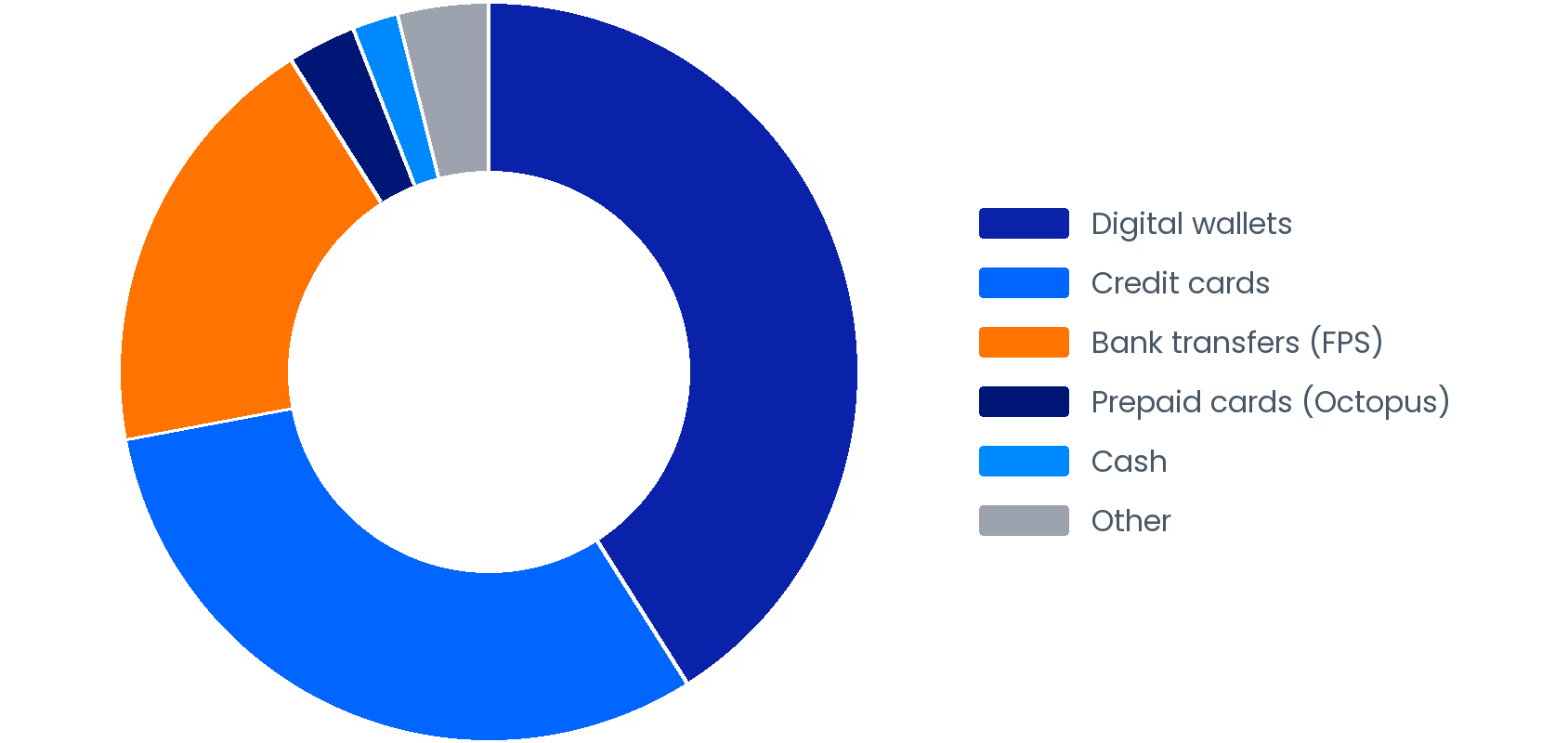
Digital wallets account for 41% of Hong Kong's e-commerce market in 2025 — the first year they have overtaken card payments. Credit cards hold 31%, FPS bank transfers 19%. Together the three leading categories cover 91% of online transaction volume. Hong Kong's 2025 payment breakdown:
Digital wallets — 41%, rising to 51% by 2030. AlipayHK, WeChat Pay HK, Octopus wallet, and PayMe define the local ecosystem. AlipayHK alone holds 4.5 million active users — the single most-used digital wallet in the market.
Credit cards — 31%, declining to 23% by 2030. Hong Kong consumers hold an average of 3.4 cards each. UnionPay International (UPI) and EPS are the primary domestic schemes, followed by Visa, Mastercard, and American Express.
Bank transfers (FPS) — 19%, rising to 23% by 2030. The Hong Kong Monetary Authority's FPS (also known as 轉數快) uses the shared HKQR standard and supports real-time multi-currency settlement.
Prepaid cards (Octopus) — 3%. The Octopus card (八達通) has 98% penetration among Hong Kong residents aged 15–64. Primarily a transit and small-purchase tool; relevant for merchants in everyday-spend categories.
Cash — 2%, declining to 1% by 2030. Minimal factor in online commerce. No strategic investment recommended for first-launch checkout.
Hong Kong E-commerce Payment Share 2025
How Digital Wallets, Credit Cards, and FPS Work for Merchants in Hong Kong
Hong Kong's payment stack is led by wallets (41%) and carries a materially higher FPS bank transfer share (19%) than most East Asian markets. The key integration risks are UPI domestic scheme routing — commonly missed by international-only gateways — and PayMe's separate business enrollment requirement. The table below covers key platforms, settlement behavior, and integration considerations for each method. For merchants experiencing cross-border card declines on UPI-issued cards, routing through domestic scheme-aware acquirers and implementing decline recovery logic is the recommended approach.
Payment Method | Key Platforms | Approx. Share | What Merchants Should Know |
|---|---|---|---|
Digital wallets | AlipayHK, WeChat Pay HK, PayMe, Octopus wallet | ~41% | PayMe (operated by HSBC) requires separate business enrollment — confirm support before listing it as an accepted method at checkout. |
Credit cards | UnionPay International (UPI), EPS, Visa, Mastercard, Amex | ~31% | UPI and EPS are the primary domestic schemes; excluding them in favor of Visa/Mastercard alone will miss a significant share of locally issued cards. Always enable both international and domestic scheme routing. |
Bank transfers (FPS) | HKMA FPS (轉數快), HKQR | ~19% | FPS supports HKD and RMB settlement in real time and is irrevocable once received — no buyer-initiated reversal. The dual-currency capability removes the need for a separate RMB payment channel for buyers from mainland China. |
Prepaid cards | Octopus card (八達通) | ~3% | Online acceptance requires integration with Octopus's proprietary API — not routed through standard card networks. Standard gateway support is insufficient. |
Cash | — | ~2% | Projected to fall to 1% by 2030; no strategic investment recommended for online channels. |
Payment Method Trends in Hong Kong: 2025 to 2030
Digital wallets are the dominant growth story, rising from 41% to 51% by 2030 as AlipayHK and WeChat Pay HK deepen adoption. Credit card share compresses from 31% to 23% — not declining in absolute terms but migrating into wallet layers. FPS grows from 19% to 23%, matching credit cards in projected 2030 share. For merchants configuring checkout to balance the wallet-dominant trajectory against card and FPS coverage, the payment method quadrant framework provides a placement model for markets undergoing a structural wallet shift.
Hong Kong Payment Method Share: 2025 vs 2030