






The Philippines is one of Southeast Asia's fastest-growing digital payment markets, with 66.64 million digital payment users and over $49.6 billion in digital transaction volume projected for 2025 (Worldpay). GCash has near-ubiquitous reach across 94 million users and 6 million merchants. With roughly 50% of the population still unbanked, cash and COD (Cash on Delivery) remain structurally embedded alongside digital channels — a combination that defines the Philippine checkout experience.
Philippine market snapshot
Country | Philippines |
|---|---|
Population | 116.8 million |
GDP (USD) | $491.0 billion |
Currency | Philippine Peso (PHP) |
Digital payment transaction volume (2025) | $49.6 billion (Worldpay) |
Digital payment users (2025) | 66.64 million (Worldpay) |
Which Payment Methods Do Philippine Buyers Use Most?
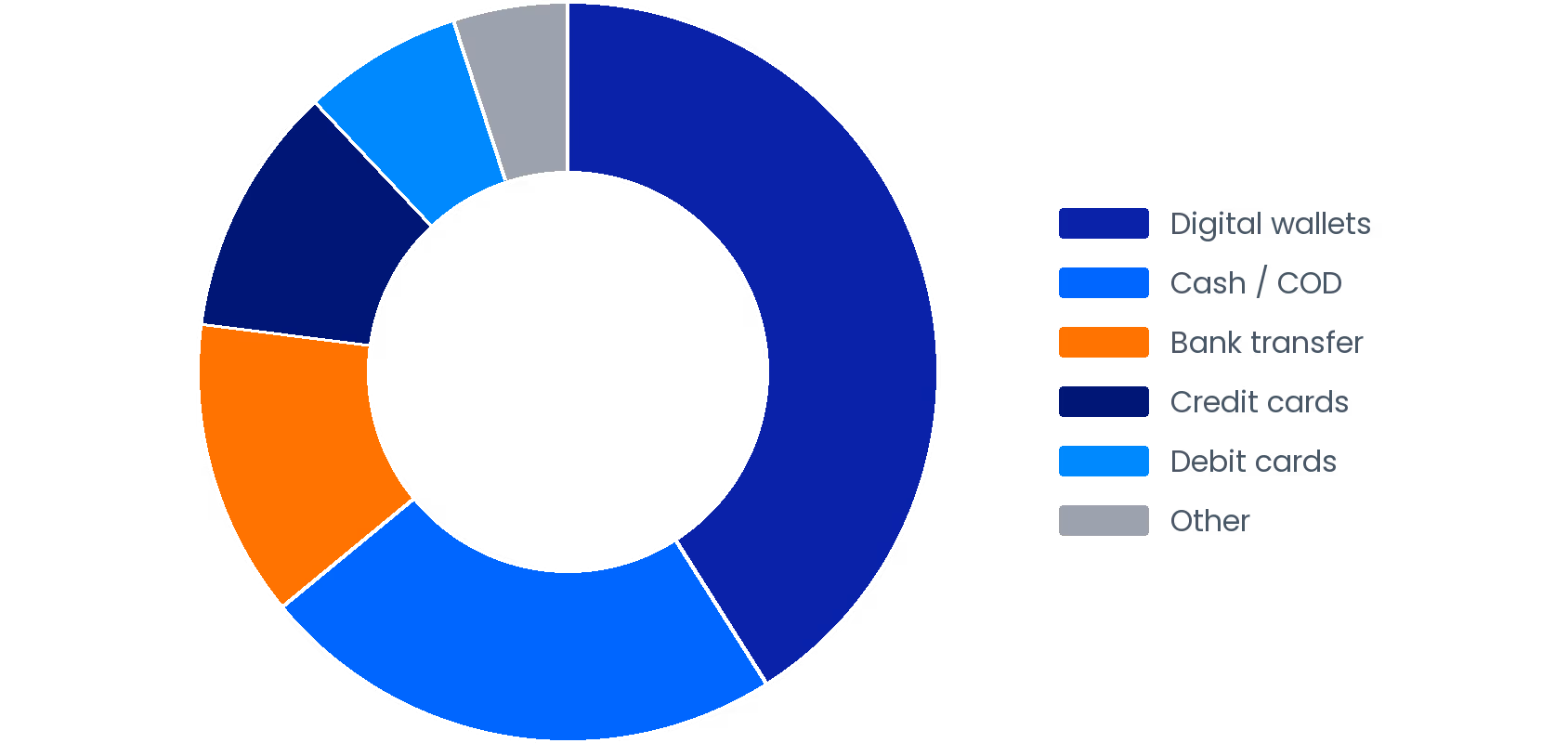
Digital wallets dominate at 41% of e-commerce transactions in 2025, driven by GCash's outsized reach. COD holds 23%, reflecting the large unbanked population. Bank transfer is third at 13% and is projected to be the fastest-growing category by 2030. Philippines' 2025 payment breakdown:
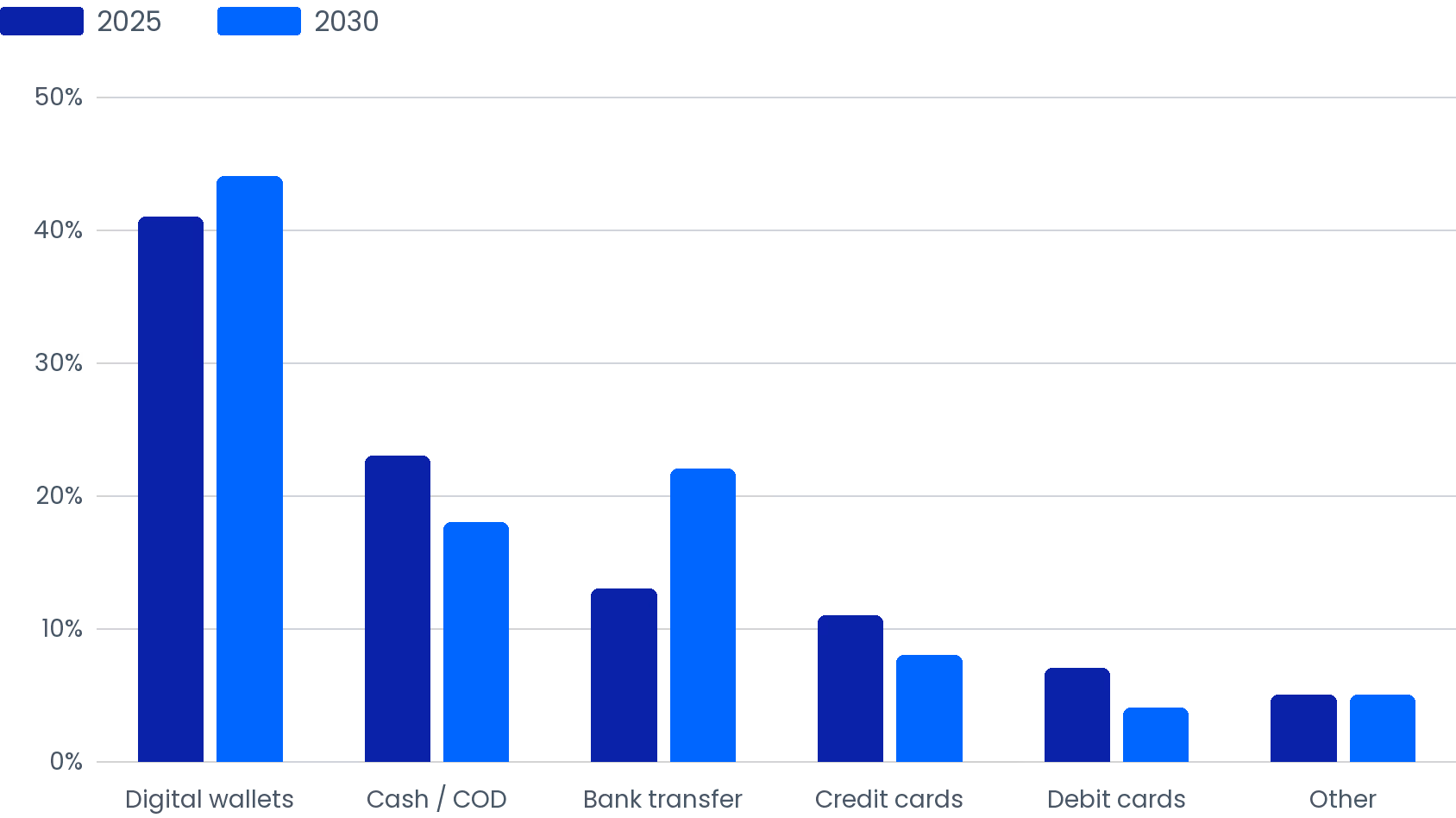
Digital wallets — 41%, rising to 44% by 2030. GCash anchors the market with 94 million users and 6 million merchant acceptance points. Maya, Lazada Wallet, and ShopeePay hold secondary positions.
Cash / COD — 23%, declining to 18% by 2030. Approximately 50% of the Philippine population holds no bank account, making COD the primary access point for online shopping among underbanked consumers.
Bank transfer — 13%, projected to reach 22% by 2030. Growth is powered by InstaPay and QR Ph (Quick Response Philippine), enabling fast A2A (Account-to-Account) transfers. Bank transfer is on track to be the fastest-growing category through 2030.
Credit cards — 11%, declining to 8% by 2030. Below-regional-average penetration, contracting as consumers shift toward wallet and transfer-based methods. Primary schemes are Visa and Mastercard.
Debit cards — 7%, declining to 4% by 2030. Primary card schemes are Visa and Mastercard alongside local networks.
Philippines E-Commerce Payment Method Share (2025)
How GCash, Bank Transfers, and Cards Work for Merchants in the Philippines
The Philippines combines a dominant wallet (GCash), significant COD volume, and growing bank transfer use — each method carrying different integration requirements, settlement timelines, and buyer eligibility constraints. The table below maps these variables for each method.
GCash and COD together cover 64% of Philippine online transaction volume. Cross-border card authorization rates in the Philippines run below the regional average; routing through a local acquirer or implementing smart retry logic materially improves approval rates.
Payment Method | Key Platforms | Approx. Share | What Merchants Should Know |
|---|---|---|---|
Digital Wallets | GCash, Maya, Lazada Wallet, ShopeePay | ~41% | GCash requires separate merchant onboarding with GXI (GCash's parent); failure to onboard blocks the largest single buyer segment at checkout. |
Cash / COD | Logistics partners, marketplace fulfillment | ~23% | Apply order value caps (typically PHP 5,000–10,000) to contain refusal risk on undelivered high-value shipments. |
Bank Transfer | InstaPay, QR Ph | ~13% | InstaPay settlements are near-real-time (under 30 seconds), reducing merchant reconciliation lag compared to card settlement cycles. |
Credit Cards | Visa, Mastercard | ~11% | Cross-border authorization rates run below the regional average; routing via a local acquirer is recommended. |
Debit Cards | Visa, Mastercard, local schemes | ~7% | Many Philippine debit cards are not enrolled for 3DS (3-D Secure) by default — configure fallback handling to avoid false declines on non-enrolled cards. |
How Payment Methods in the Philippines Will Change by 2030
Digital wallets grow from 41% to 44% by 2030. Bank transfer is the standout growth story — projected to nearly double from 13% to 22%, driven by InstaPay and QR Ph adoption. COD declines from 23% to 18% as digital payment infrastructure extends to rural areas. For a structured approach to deciding which methods to activate first, the payment method quadrant framework provides a decision model applicable across the Philippine market.
Philippines Payment Method Share: 2025 vs 2030 (%)