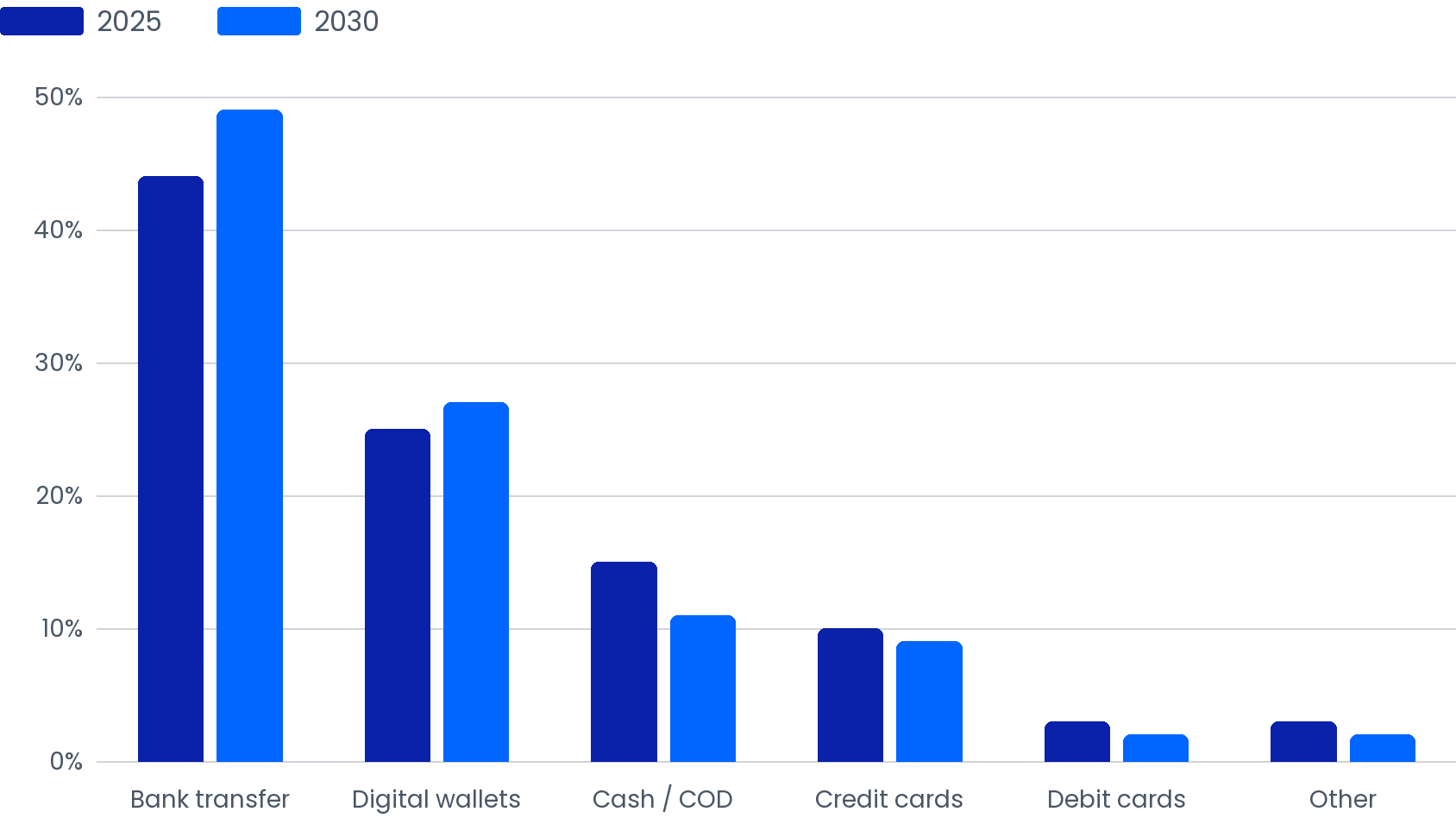


Bank transfer and digital wallets together account for 69% of Thailand's online transaction volume in 2025. PromptPay — Thailand's central-bank-operated instant payment system — has fundamentally reshaped how Thai consumers pay online, enabling real-time QR code payments via any mobile banking app. With over 70 million PromptPay-linked accounts and deep smartphone adoption, Thailand is one of Southeast Asia's most digitally advanced payment markets.
Market snapshot: Thailand
Country | Thailand |
|---|---|
Population | 71.6 million |
GDP (USD) | $577 billion |
Currency | Thai Baht (THB) |
PromptPay registered users | Over 70 million accounts linked (Bank of Thailand) |
Digital payment user penetration | Among the highest in Southeast Asia; market expanding as of 2025 |
Which Payment Methods Do Thai Buyers Use Most?
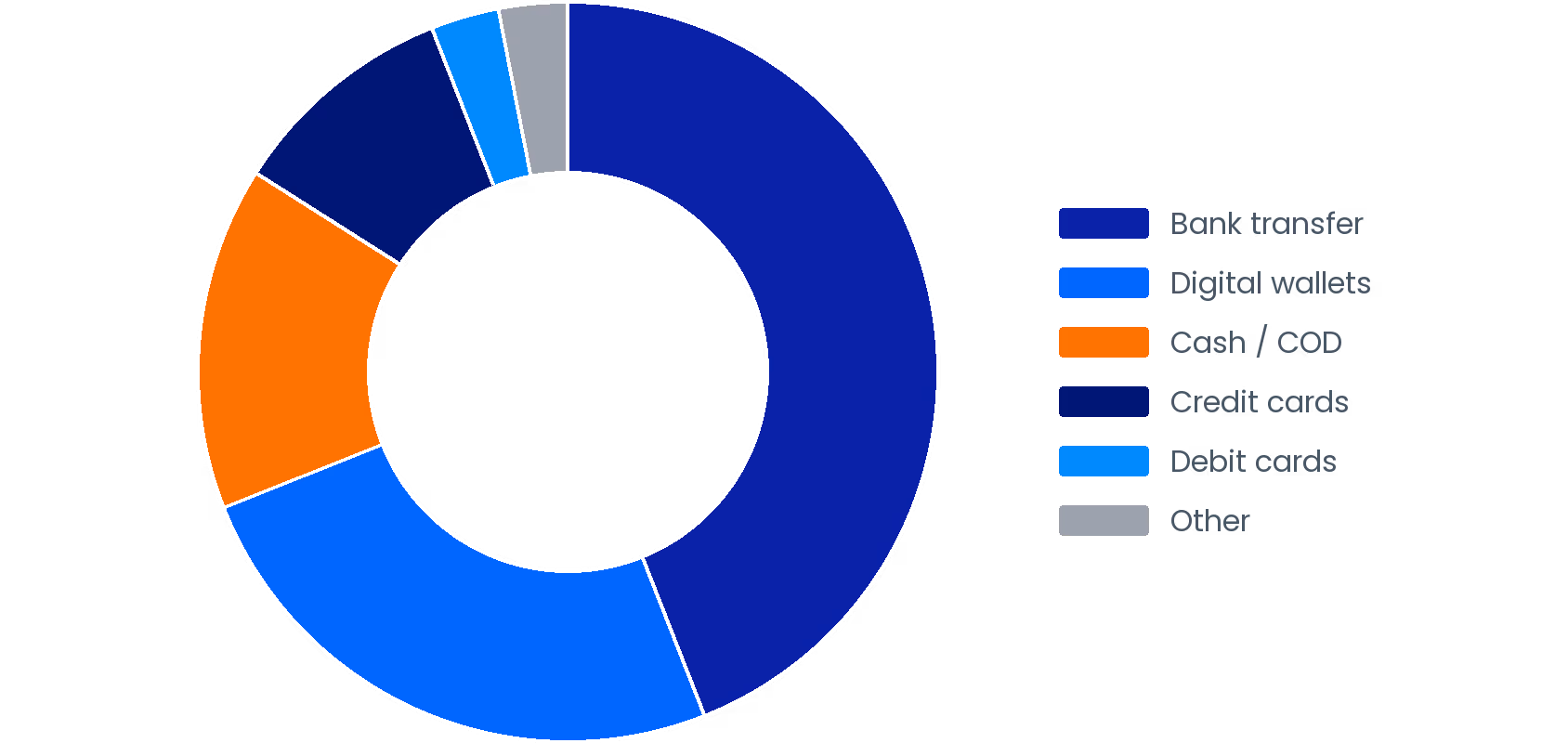
Bank transfer holds 44% of Thailand's e-commerce market in 2025 — led entirely by PromptPay — and digital wallets hold 25%. Together they cover 69% of online transaction volume. Thailand's 2025 payment breakdown:
- Bank transfer — 44%, rising to 49% by 2030. PromptPay's near-universal merchant coverage lets buyers scan a QR code via any mobile banking app and complete payment in seconds. Not supporting PromptPay leaves nearly half of all Thai buyers without a preferred option at checkout.
- Digital wallets — 25%, rising to 27% by 2030. TrueMoney and ShopeePay lead among Thai online shoppers. Growth is driven by PromptPay QR compatibility across wallet apps and diverse funding sources including credit card binding and BNPL (Buy Now, Pay Later) integration.
- Cash on delivery (COD) — 15%, declining to 11% by 2030. Elevated despite Thailand's digital maturity, particularly in rural and suburban areas. Cross-border merchants should treat COD as a short-term trust-building tool.
- Credit cards — 10%, holding at 9% by 2030. Serve the high average order value (AOV) and cross-border rewards segment.
- Debit cards — 3% and below. Declining as cards migrate behind the scenes into wallet and PromptPay funding flows.
Thailand 2025 E-Commerce Payment Method Share
How PromptPay, Digital Wallets, and Cards Work for Merchants in Thailand
Thailand's payment mix is anchored by PromptPay, but each method — from wallets that route through PromptPay infrastructure to cards that underperform on non-local acquirers — carries distinct settlement behavior and integration requirements. The table below maps these for each method.
PromptPay QR codes are scheme-agnostic — one QR works across all Thai banks and most wallets, and settlement is real-time and irrevocable. Thai-issued credit cards perform well for domestic 3DS (3-D Secure) authentication but see elevated decline rates when processed through non-locally-licensed acquirers; routing through a locally registered acquirer is the standard fix for merchants experiencing above-average Thai card declines.
Payment Method | Key Platforms | Approx. Share | What Merchants Should Know |
|---|---|---|---|
Bank Transfer | PromptPay, mobile banking apps (Bangkok Bank, Kasikorn, SCB) | ~44% | PromptPay QR is scheme-agnostic — one QR works across all Thai banks and most wallets. Settlement is real-time and irrevocable; no buyer-initiated reversal after payment. |
Digital Wallets | TrueMoney, ShopeePay | ~25% | TrueMoney and ShopeePay often route through PromptPay infrastructure — confirm with your processor whether these appear as wallet or transfer transactions in settlement reports. |
Cash / COD | Courier-collected, convenience store networks | ~15% | COD refusal rates in Thailand average above the regional Southeast Asia mean — factor return logistics and cash reconciliation into margin models before activating COD on high-value SKUs. |
Credit Cards | Visa, Mastercard, Thai bank issuers | ~10% | Thai-issued cards perform well for domestic 3DS authentication but see elevated decline rates on non-locally-licensed acquirers. |
Debit Cards | Visa Debit, Mastercard Debit | ~3% | Most Thai debit cards must have online payment activated by the cardholder through their bank app — expect elevated declines from first-time buyers. |
How Payment Methods in Thailand Will Change by 2030
Bank transfer grows from 44% to 49% by 2030 as PromptPay adoption deepens; COD declines from 15% to 11%. Digital wallets rise modestly from 25% to 27%. The trajectory reinforces PromptPay as the mandatory first checkout slot for any Thailand launch. For configuring the remaining slots — which methods to surface conditionally by buyer profile and AOV — the payment method quadrant framework provides a structured approach for markets where a single rail dominates.
Thailand Payment Method Share: 2025 vs 2030 Projection