






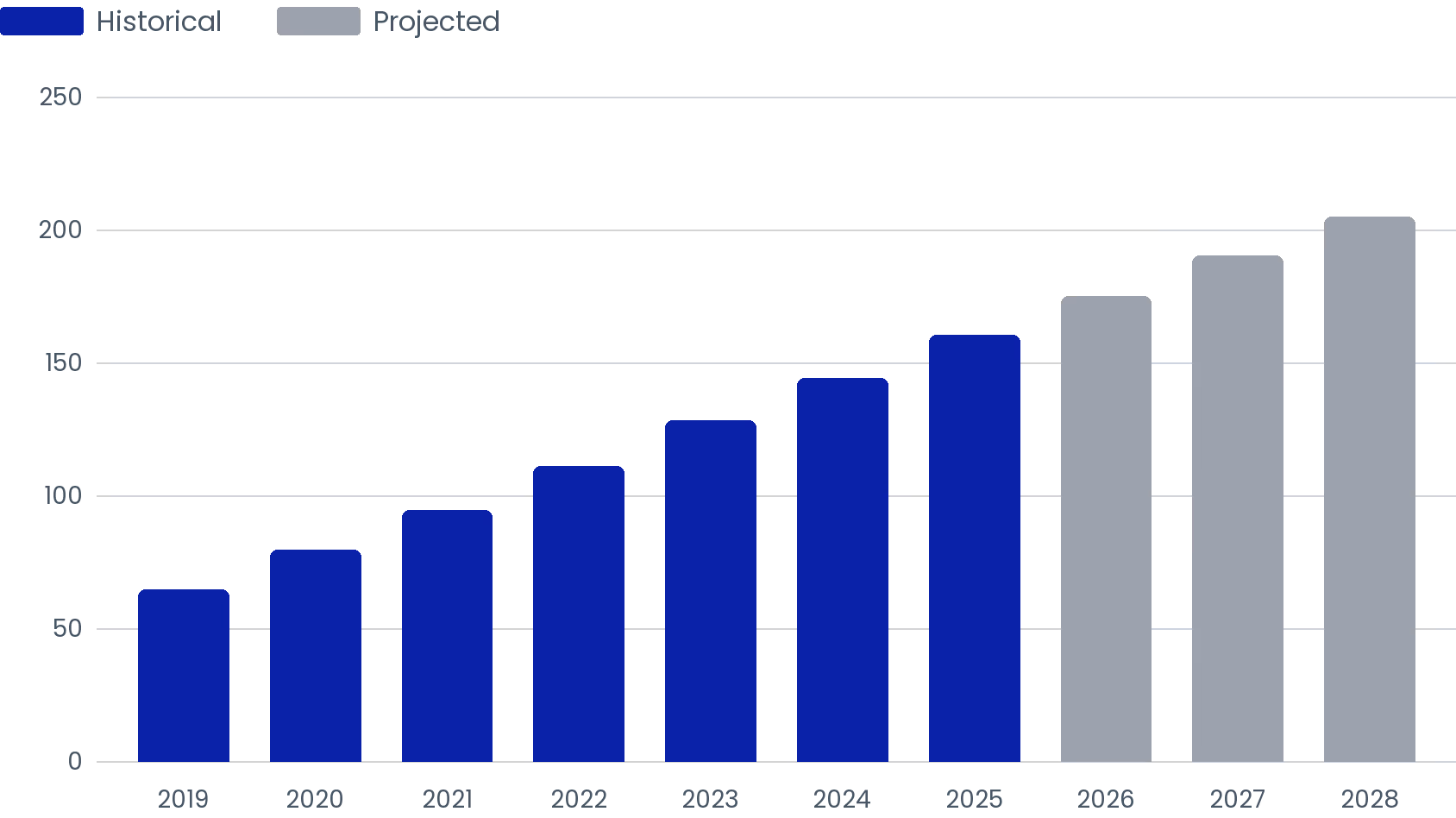
Indonesia's digital payments market is the largest in Southeast Asia, with 89% of the population using electronic payments and over 58 million active e-commerce shoppers. Projected digital payment user growth of 42% between 2024 and 2028 will push the user base past 200 million. Digital wallets and QR-based bank transfers together dominate the market, making them the baseline payment stack for any merchant entering Indonesia.
Indonesia at a glance
Country | Indonesia |
|---|---|
Population | 284.9 million |
GDP (USD) | $1,443 billion |
Currency | Indonesian Rupiah (IDR) |
E-commerce penetration | 21.56% |
Digital payment adoption | 89% |
Indonesia Digital Payment Users 2019-2028 (Millions)
Which Payment Methods Do Indonesian Buyers Use Most?
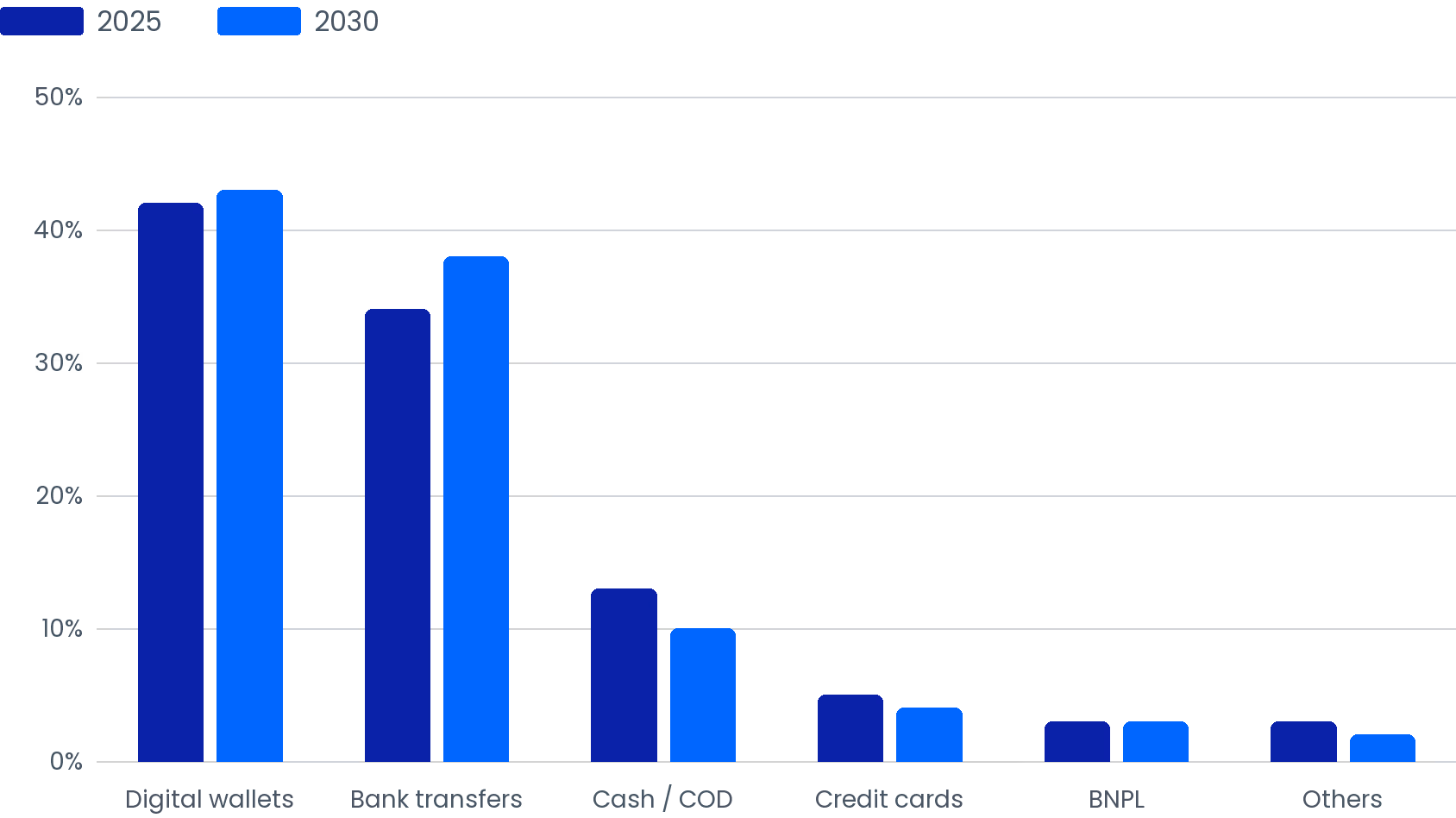
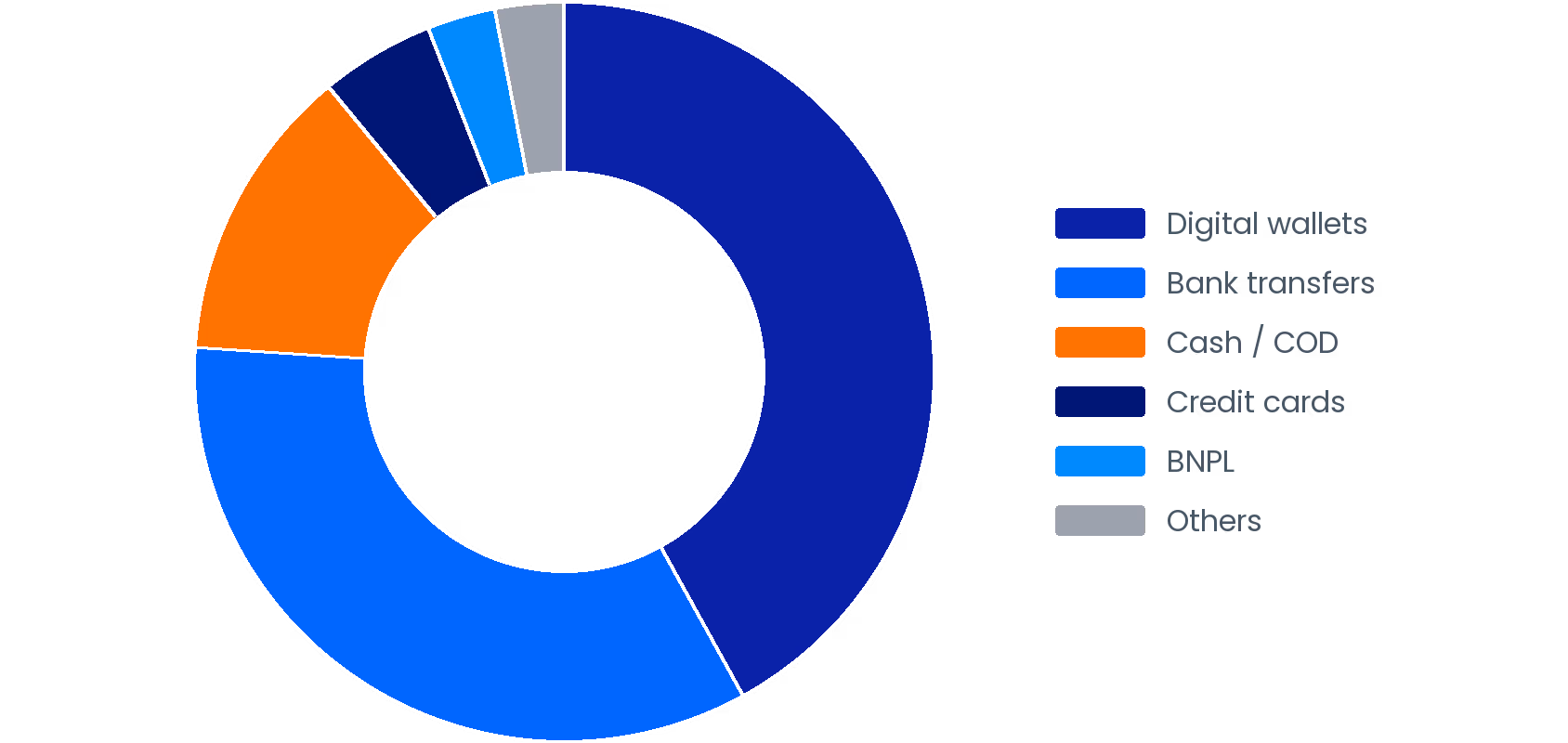
Digital wallets hold 42% of Indonesian e-commerce, bank transfers 34%, and cash/COD 13%. Together the top two digital rails cover 76% of online transaction volume. Indonesia's 2025 payment breakdown:
Digital wallets (~42%). GoPay and DANA are the dominant platforms, jointly covering 57 million users and 40 million merchants. Wallet share is projected to grow to 43% by 2030.
Bank transfers (~34%). BI-FAST and QRIS power A2A (Account-to-Account) transactions. QRIS supports cross-border QR interoperability with Singapore, Thailand, Malaysia, and China. Share is projected to reach 38% by 2030.
Cash and COD (~13%). Declining steadily under Bank Indonesia's national payment blueprint. Still a relevant trust signal in rural segments and for first-time online buyers.
Credit and debit cards (~7%). Visa and Mastercard handle most international card volume. Below-regional-average penetration due to lower formal banking access.
BNPL (~3%). Growing among buyers under 30. Credit risk sits with the BNPL (Buy Now, Pay Later) provider — a low-risk addition for merchants targeting younger demographics.
Indonesia 2025 E-Commerce Payment Method Share
How Digital Wallets, Bank Transfers, and Cards Work for Merchants in Indonesia
Payment method selection in Indonesia is shaped primarily by buyer eligibility — local wallets and bank transfers are inaccessible to foreign shoppers, while cards carry cross-border decline risk. The table below covers key platforms, settlement behavior, and the operational facts that determine which methods to activate and in what order.
Local wallets and QRIS-based transfers cover 76% of Indonesian transactions — but both require local Indonesian phone numbers or bank accounts, making them inaccessible to foreign shoppers. Cards are the only method foreign buyers can use, and cross-border card transactions in Indonesia face elevated decline rates; for merchants handling this segment, building multi-rail retry logic is the standard recovery approach.
Payment Method | Key Platforms | Approx. Share | What Merchants Should Know |
|---|---|---|---|
Digital wallets | GoPay, DANA | ~42% | Requires local Indonesian phone number and bank account — not accessible to foreign shoppers. |
Bank transfers | BI-FAST, QRIS | ~34% | Irrevocable once settled — no chargeback exposure for merchants. BI-FAST enables real-time A2A clearing. |
Cash / COD | — | ~13% | High delivery refusal risk; merchant capital tied up until delivery is confirmed. |
Credit and debit cards | Visa, Mastercard | ~7% | The only method accessible to foreign shoppers without a local account; primary schemes are Visa and Mastercard. |
BNPL | Atome | ~3% | Merchant receives full payment at shipment; buyer repayment risk sits with the BNPL provider. |
How Indonesia's Payment Landscape Will Shift by 2030
Bank transfers are the fastest-growing category, projected to reach 38% by 2030 as QRIS adoption expands. Wallet share grows modestly to 43%; COD declines from 13% to 10% as digital infrastructure improves. For merchants configuring checkout priority, the payment method quadrant framework provides a structured approach to deciding which rail to lead with in Indonesia's dual-dominant digital market.
Indonesia E-Commerce Payment Method Share 2025-2030